
Reducing Ambiguity in a Complex Enterprise Compliance Platform
Enterprise UX Research & Product Strategy

About
A national financial institution relied on manual processes to manage hundreds of technical standards, creating inefficiencies, inconsistent documentation, and limited visibility across teams.
I led UX research and workflow design to uncover gaps, align stakeholders, and support the development of a scalable platform to standardize and automate compliance workflows.
Challenge
The organization’s legacy review system required:
Dozens of manual steps per document.
2 + hours of SME time per review cycle.
Limited visibility into document ownership, version history, and audit trail status.
Compliance risks were increasing as the number of Standards grew. The goal was to standardize governance across technology domains while establishing a scalable foundation for AI-assisted analysis and more intelligent, automated compliance workflows.
ApproachDiscovery
Solution
Implementation
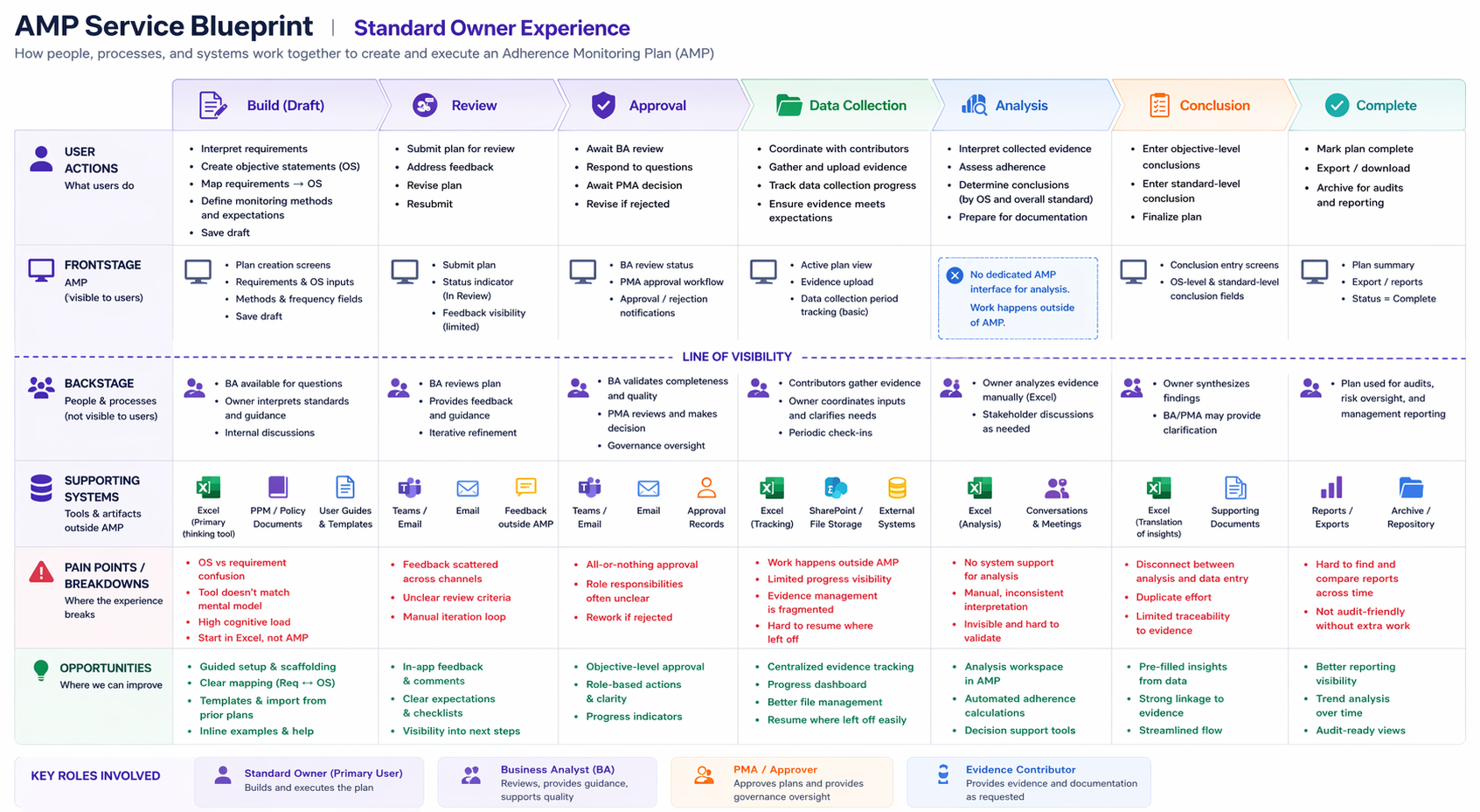
Mapped the end-to-end service experience to identify breakdowns across people, process, and tooling.
Prioritized reducing cognitive load, improving visibility into progress and ownership, aligning terminology, and enabling reuse to eliminate redundant work.
Translated insights into journey maps, service blueprints, and a prioritized backlog, while reimagining key screens and designing a proof-of-concept real-time compliance dashboard.
.

I conducted targeted user interviews with Business Analysts, Program Managers, and Standards Owners to understand how document reviews actually occurred in practice, and mapped the existing 10-step review process end-to-end.
Key insights:
Over 80% of SME time was spent on manual tracking, version alignment, and reconciling inconsistencies across disconnected tools
Heavy reliance on offline tools (Excel, SharePoint) created disconnects from the system of record
The process lacked clear entry points, sequencing, and ownership accountability
Designed a tool that serves as an interim system to standardize and validate documentation data before integration into the enterprise’s future AI/automation platform.
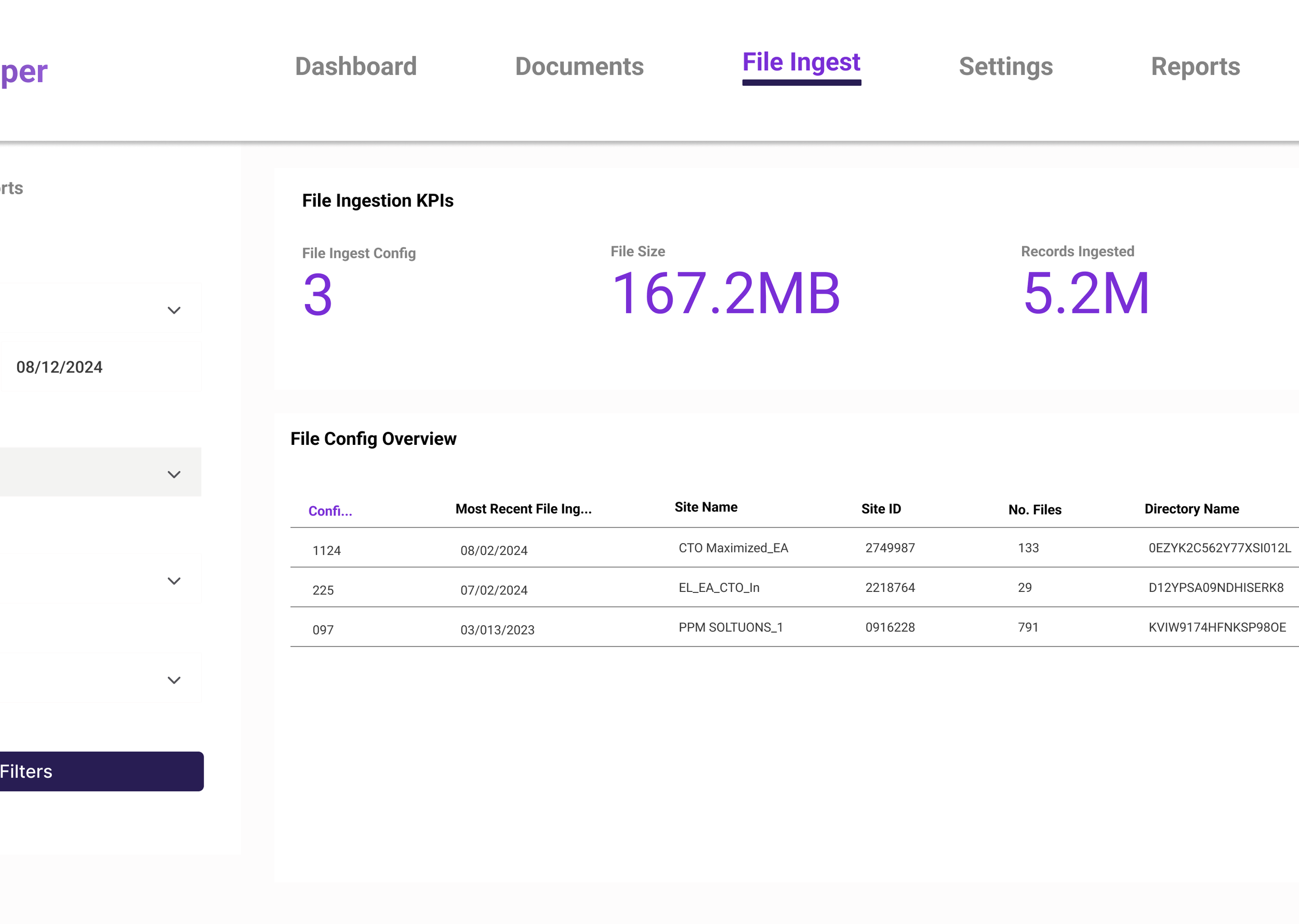
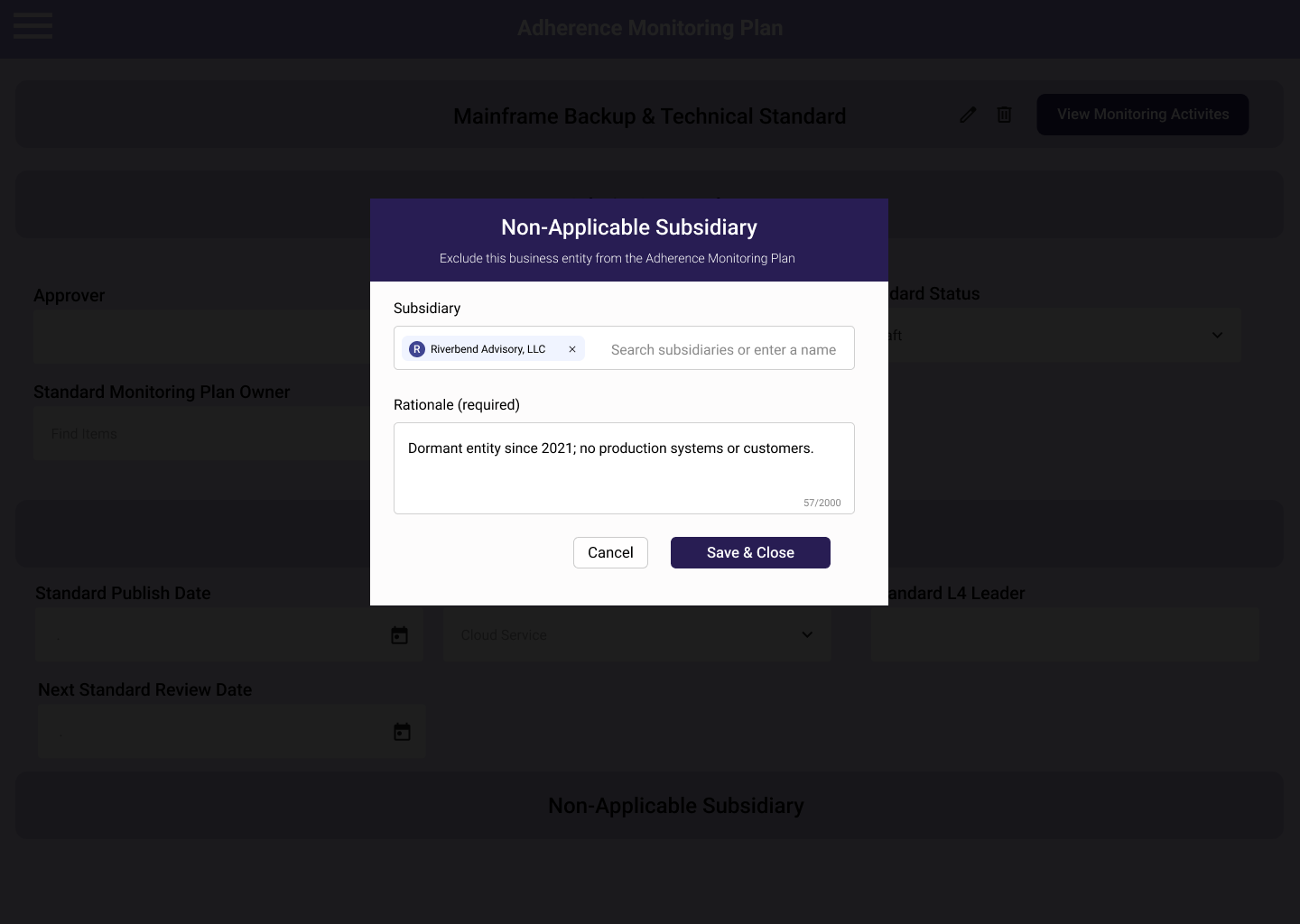
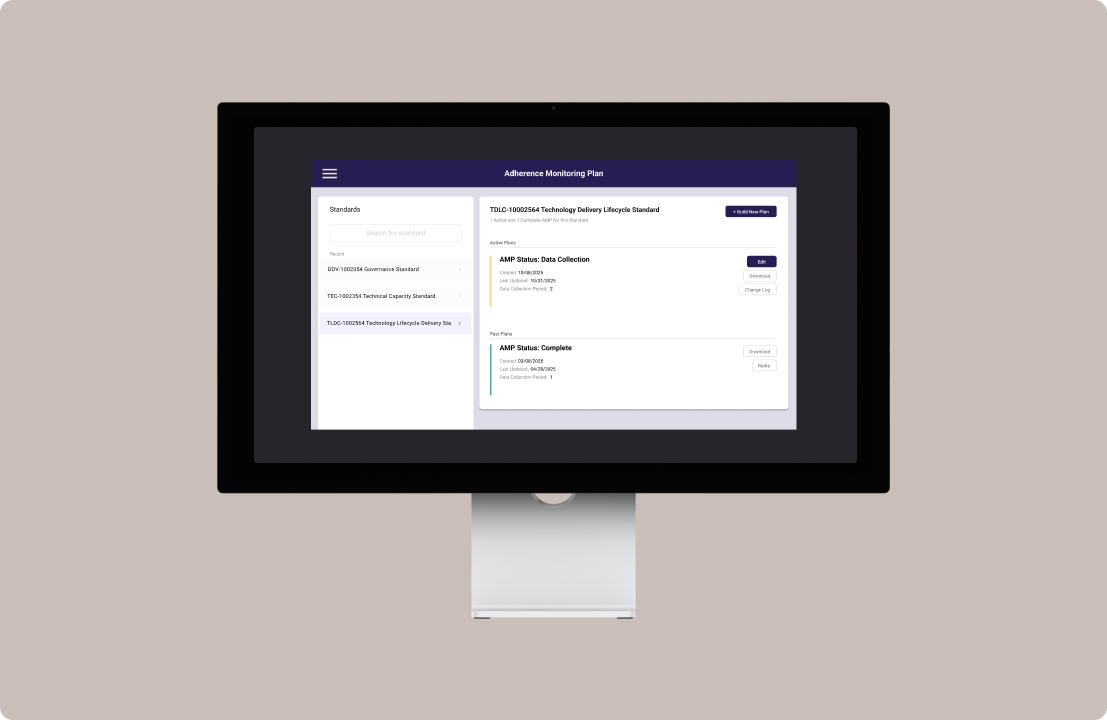
Created structured workflows, form logic, and dashboard layouts that made document readiness, ownership, and alignment visible in real time.
Applied the organization’s enterprise design system to ensure consistency, accessibility, and scalability across Power Apps interfaces.
Worked directly with Power Apps developers to translate design specifications into functional screens and forms.
Validated component behavior, permissions, and field logic to align with governance requirements.
Delivered annotated prototypes and supporting documentation to ensure smooth implementation and accurate data capture for downstream automation efforts.
Design Exploration
Collaboration
Partnered with the Data team to translate the manual workflow into a structured data model.
Created sandbox mockups to validate usability and data hierarchy before implementation.
Collaborated with Dev teams to design an internal Power Apps tool supporting governance and compliance tracking.

Impact~75%
faster review cycles
60%
less manual tracking
100s
documents managed in one dashboard
Key TakeawaysGovernance through design
Embedded UX principles into compliance operations, turning rigid policy review into a flexible digital workflow.
Design × Data × Dev collab
Partnering with technical teams early led to scalable data models and sustainable automation.
Risk-aware innovation
Proved that even in highly regulated spaces, thoughtful design can accelerate efficiency without compromising security.